
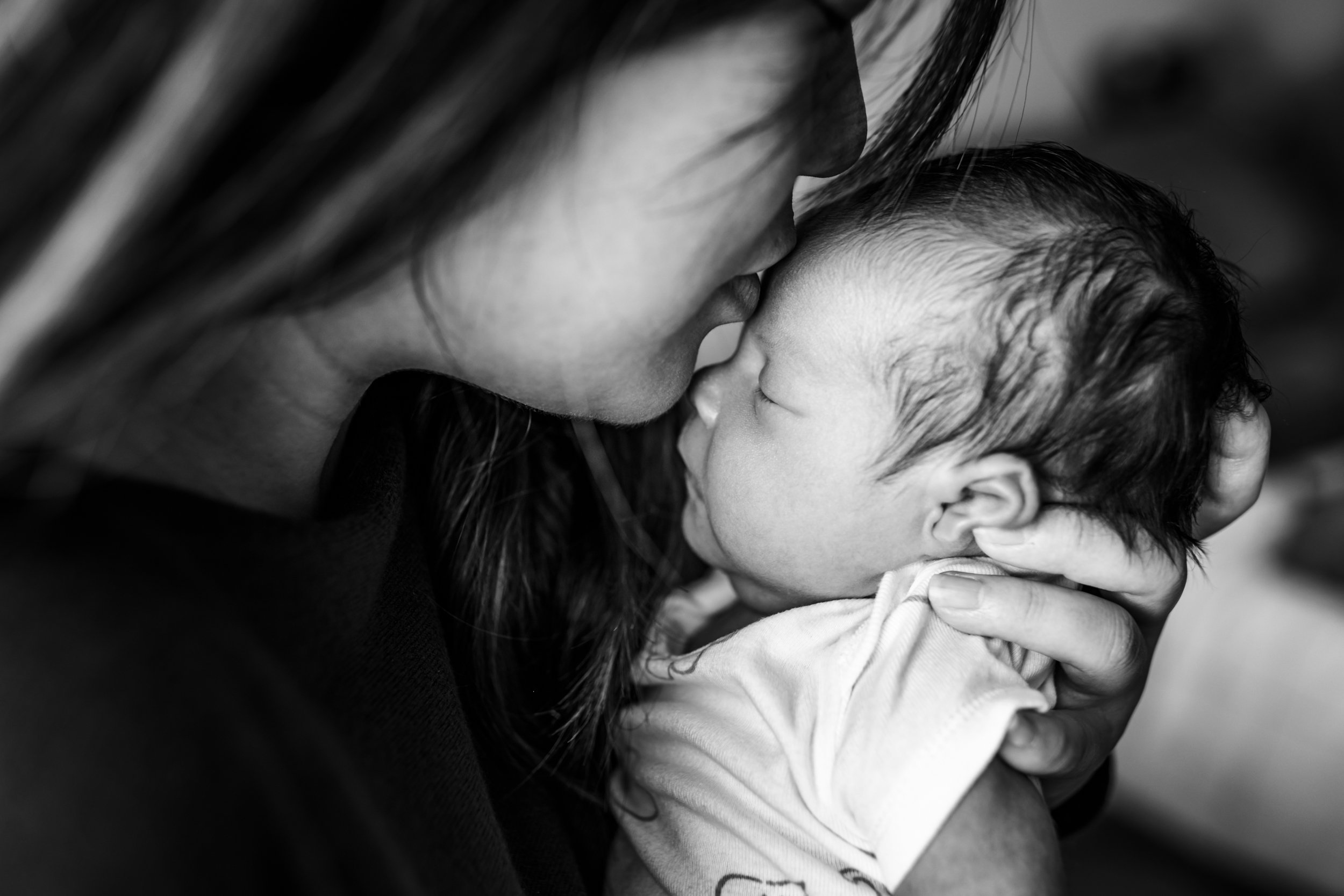


One of the most common questions I get is when to schedule a newborn session. The honest answer is that there’s no single right window — it depends on your baby, your recovery, and what you want the photos to show. Here’s how I think about the different timing options.
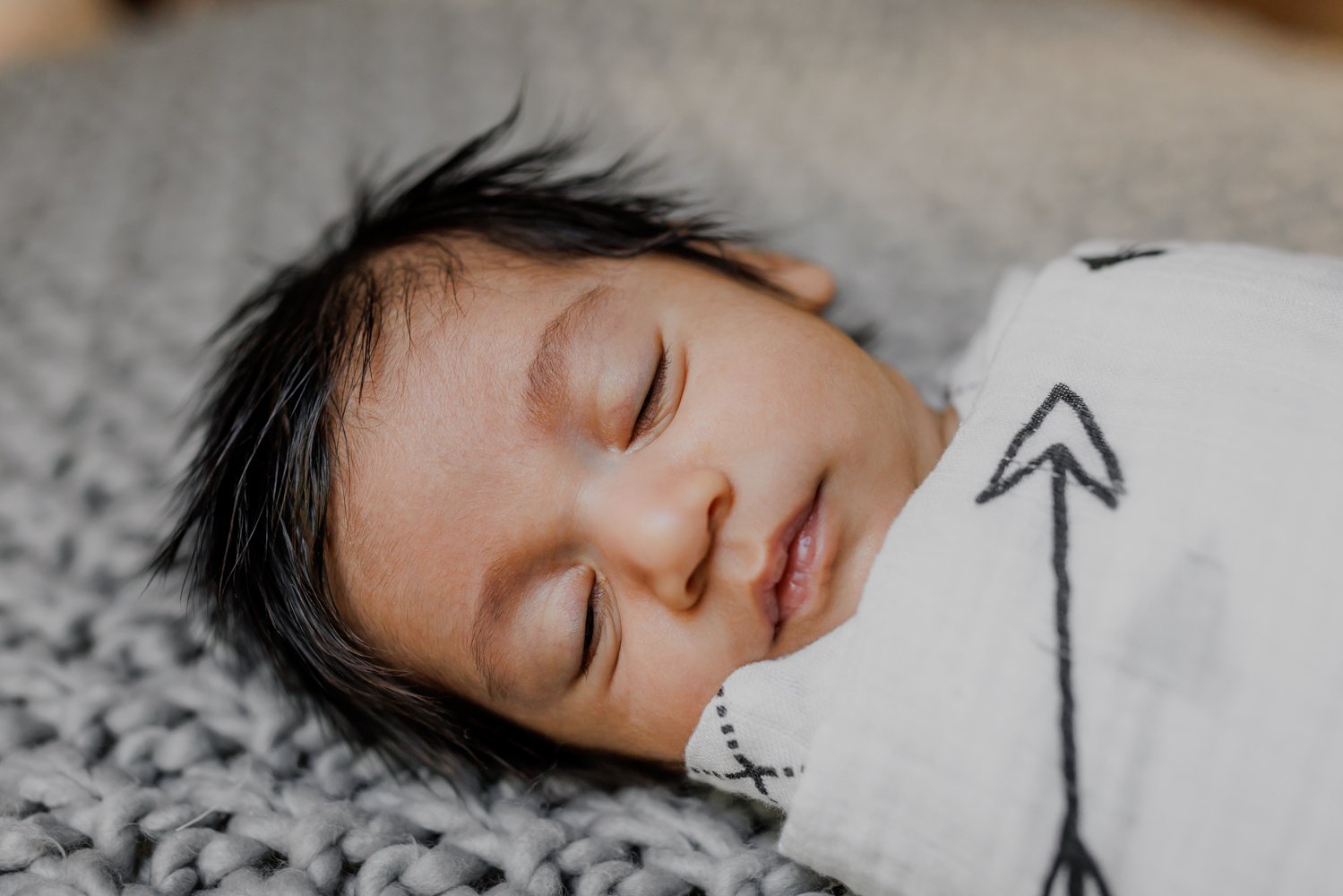
The First Two Weeks
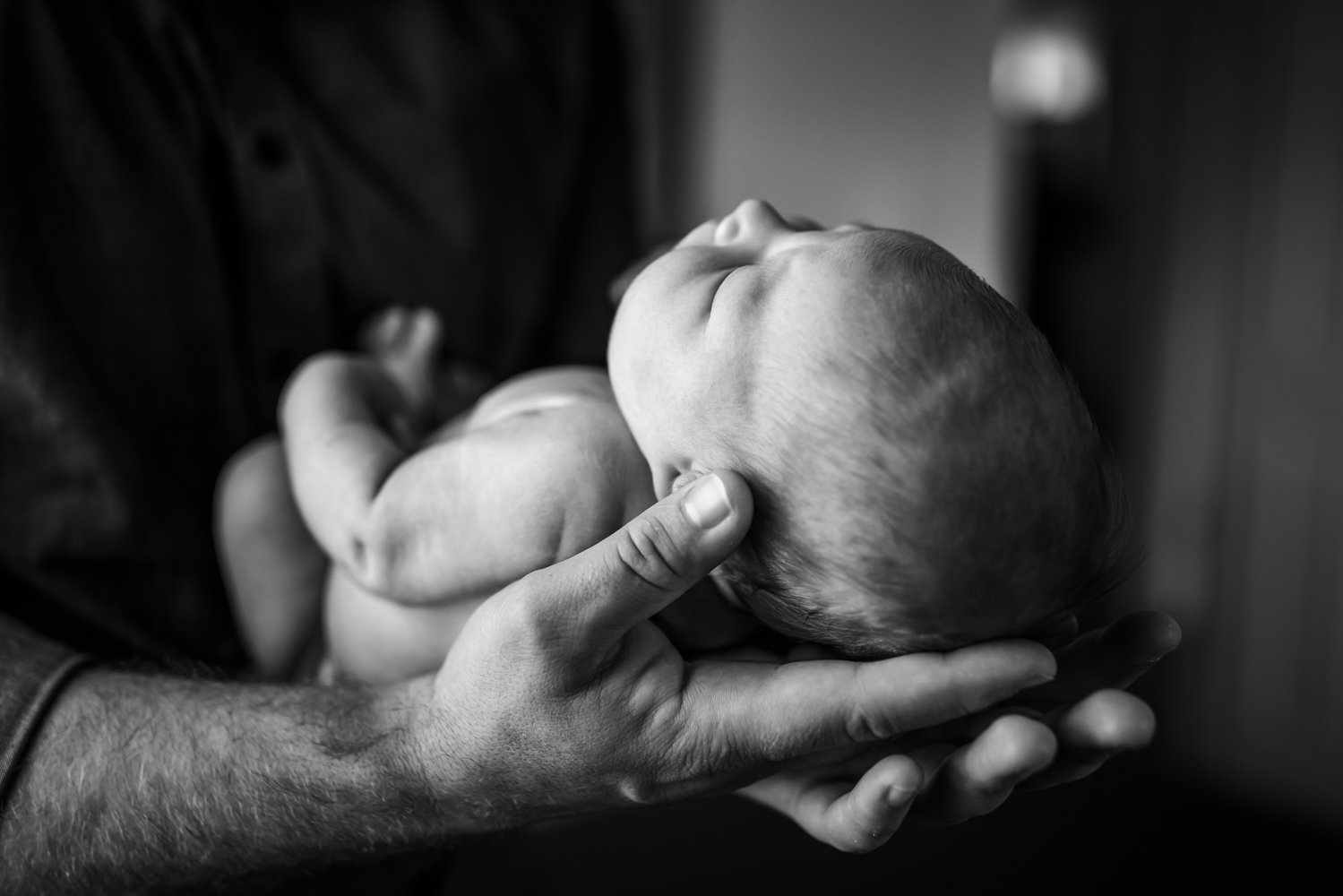
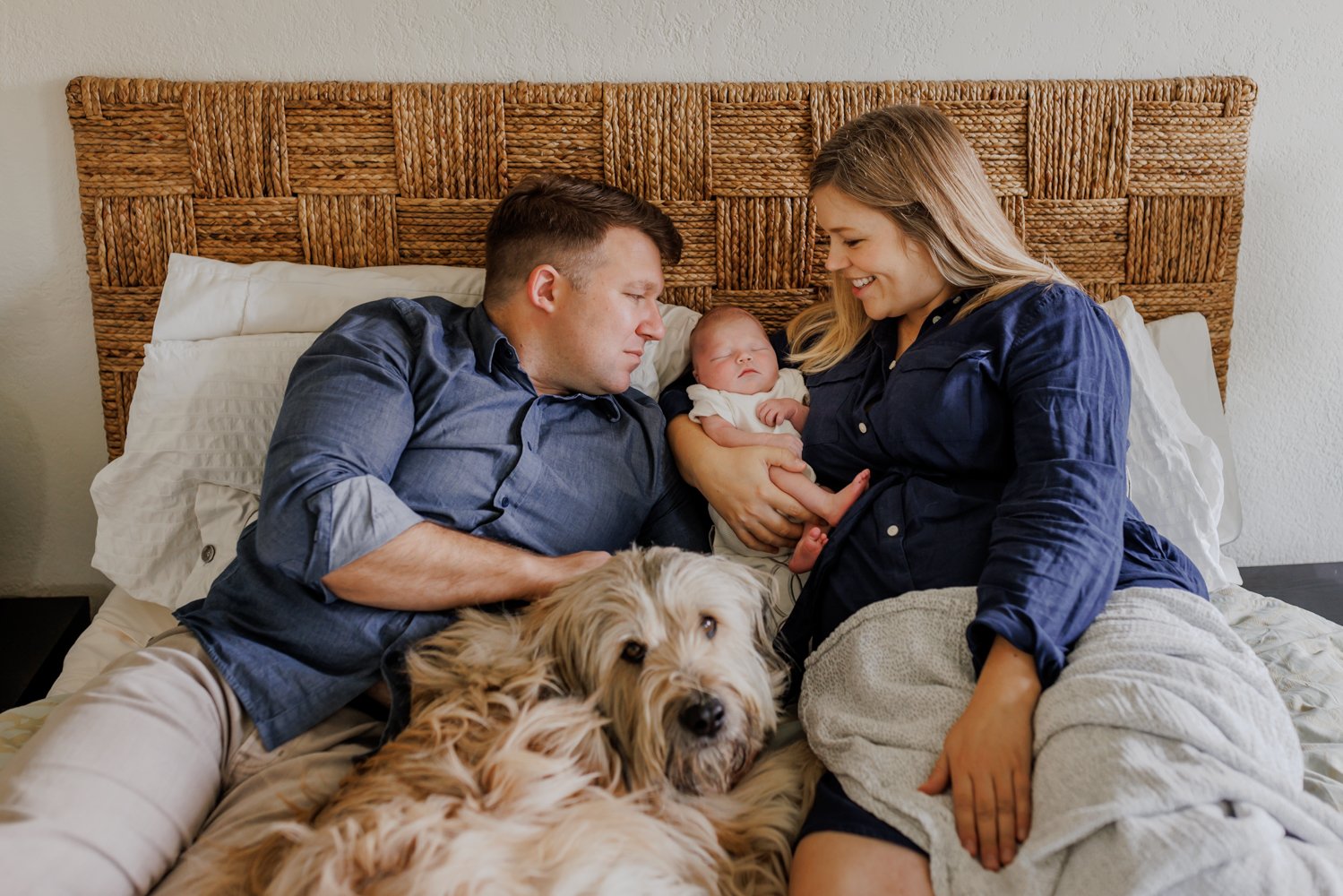
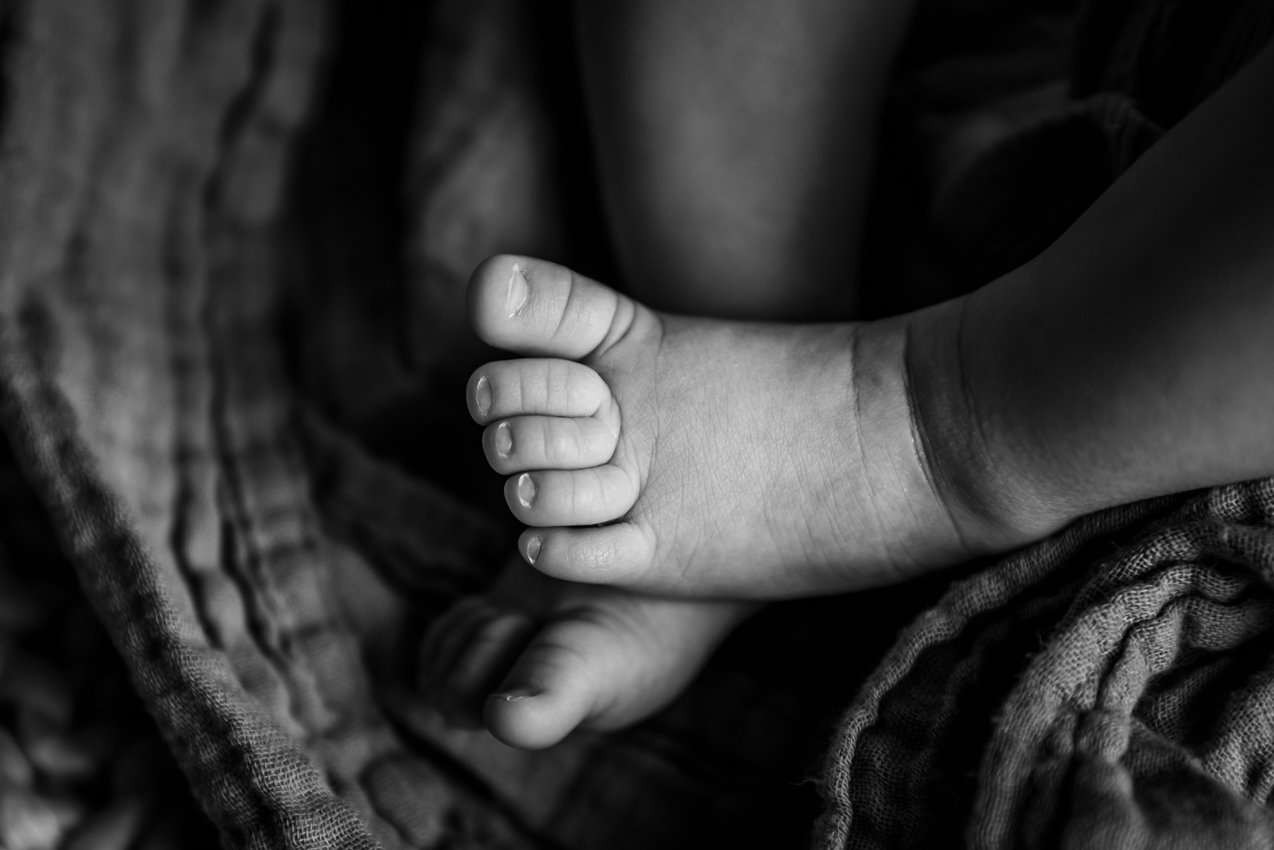
The first two weeks are when babies are at their smallest and sleepiest. Those early details — the way they curl up, the translucent quality of their skin, the way they fit entirely in one arm — don’t last long. Many families choose this window because they want to document those very first days, before anything has shifted.
Benefits of Earlier Sessions
Babies change quickly in these early weeks, sometimes noticeably from one day to the next. This is also when many families are still in the thick of that early newborn haze — exhausted but present in a way that’s hard to describe. That reality is worth documenting.
Baby acne can appear around 3–4 weeks, but it’s temporary and varies by baby. If timing around it matters to you, we can talk through it during planning.
Waiting Until 5–8 Weeks
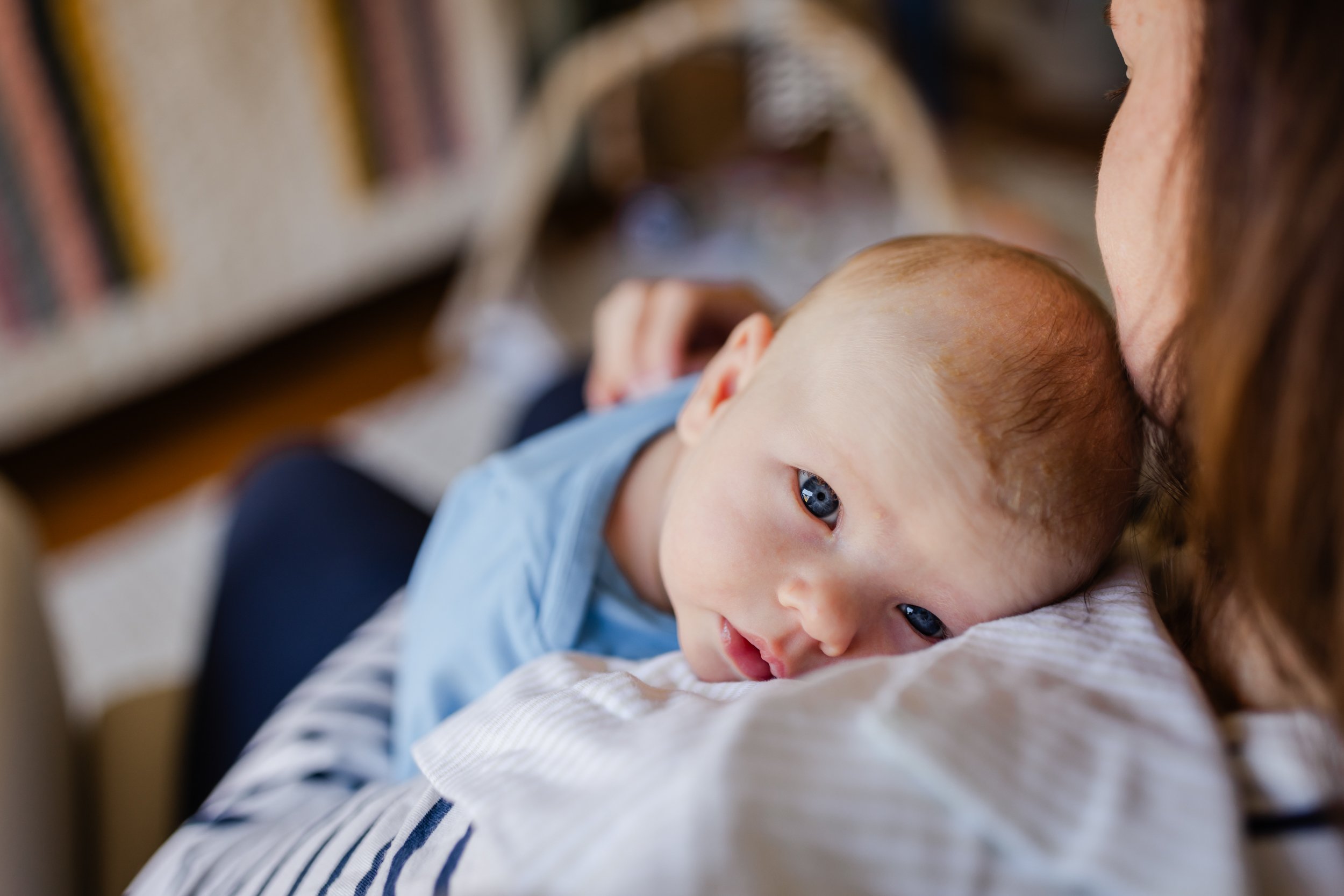
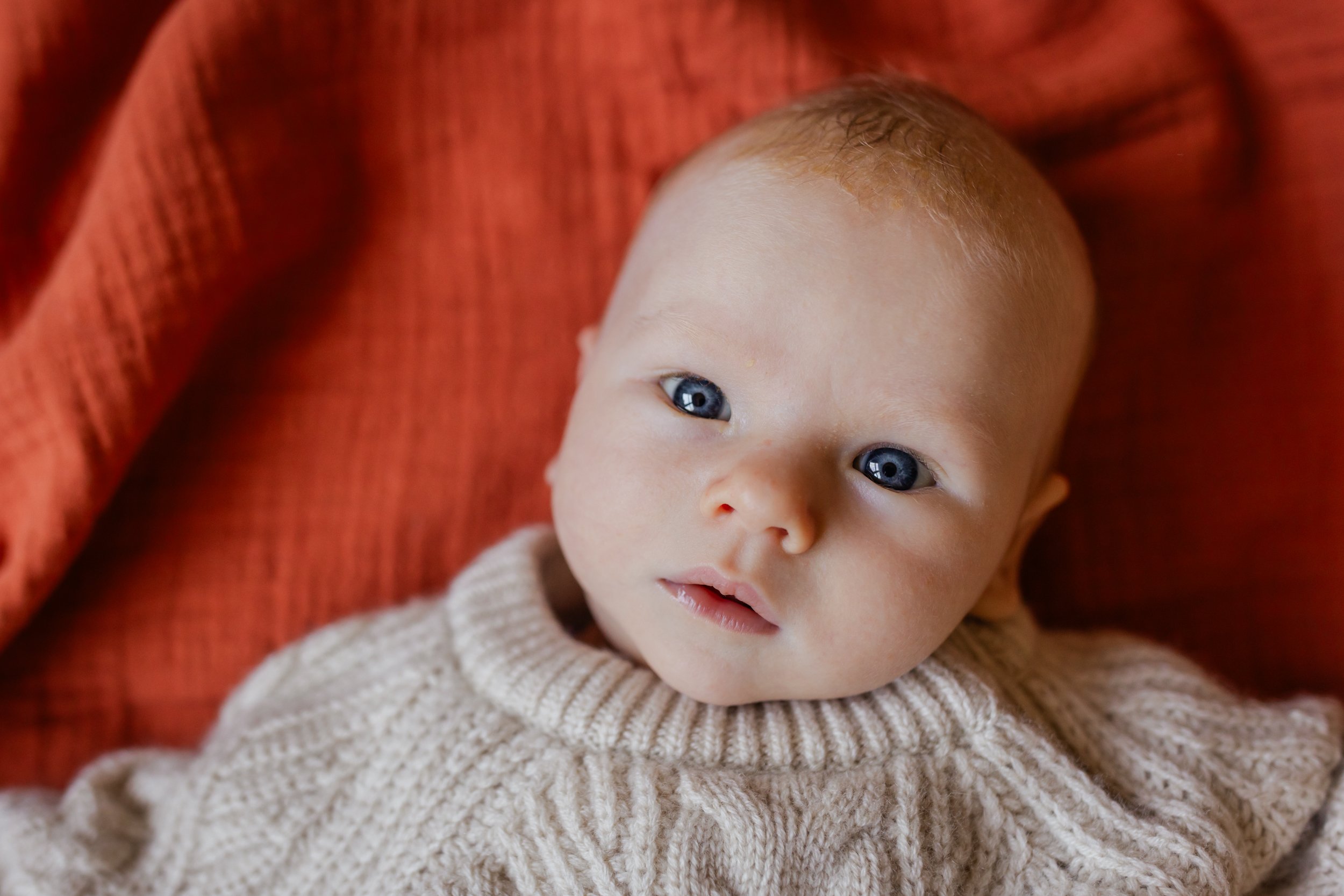
Some families prefer to wait until they’ve found their footing a little. By 5–8 weeks, most babies have settled into more of a pattern, and parents have usually gotten to know their cues. Babies are also more alert at this stage — you start to see more eye contact, more expression, and those first early smiles. It’s also a more comfortable window for parents who are still recovering from birth or getting comfortable with feeding.
There’s no wrong choice here. Each stage has something worth documenting.

What to Expect at Each Stage
Early Weeks
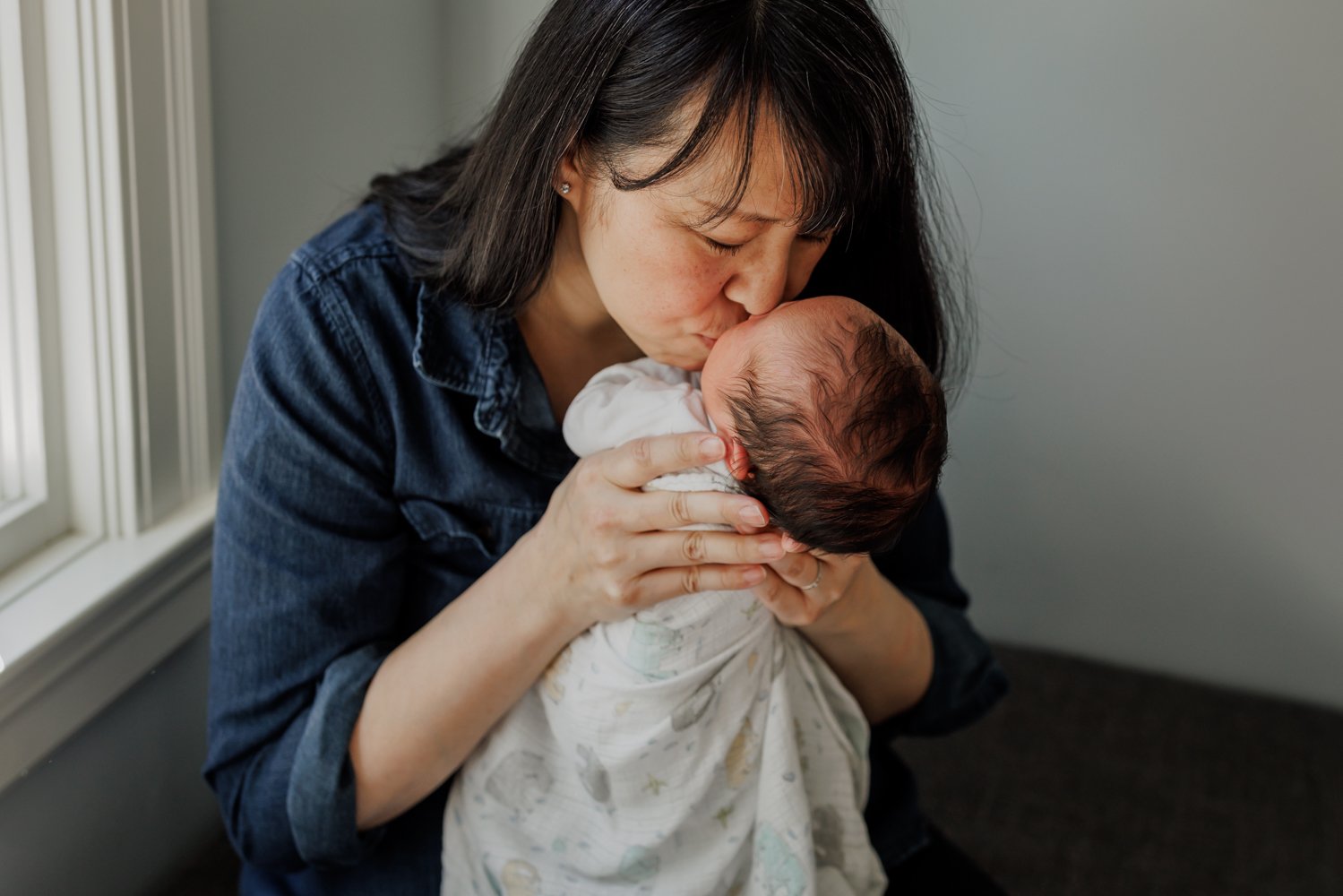
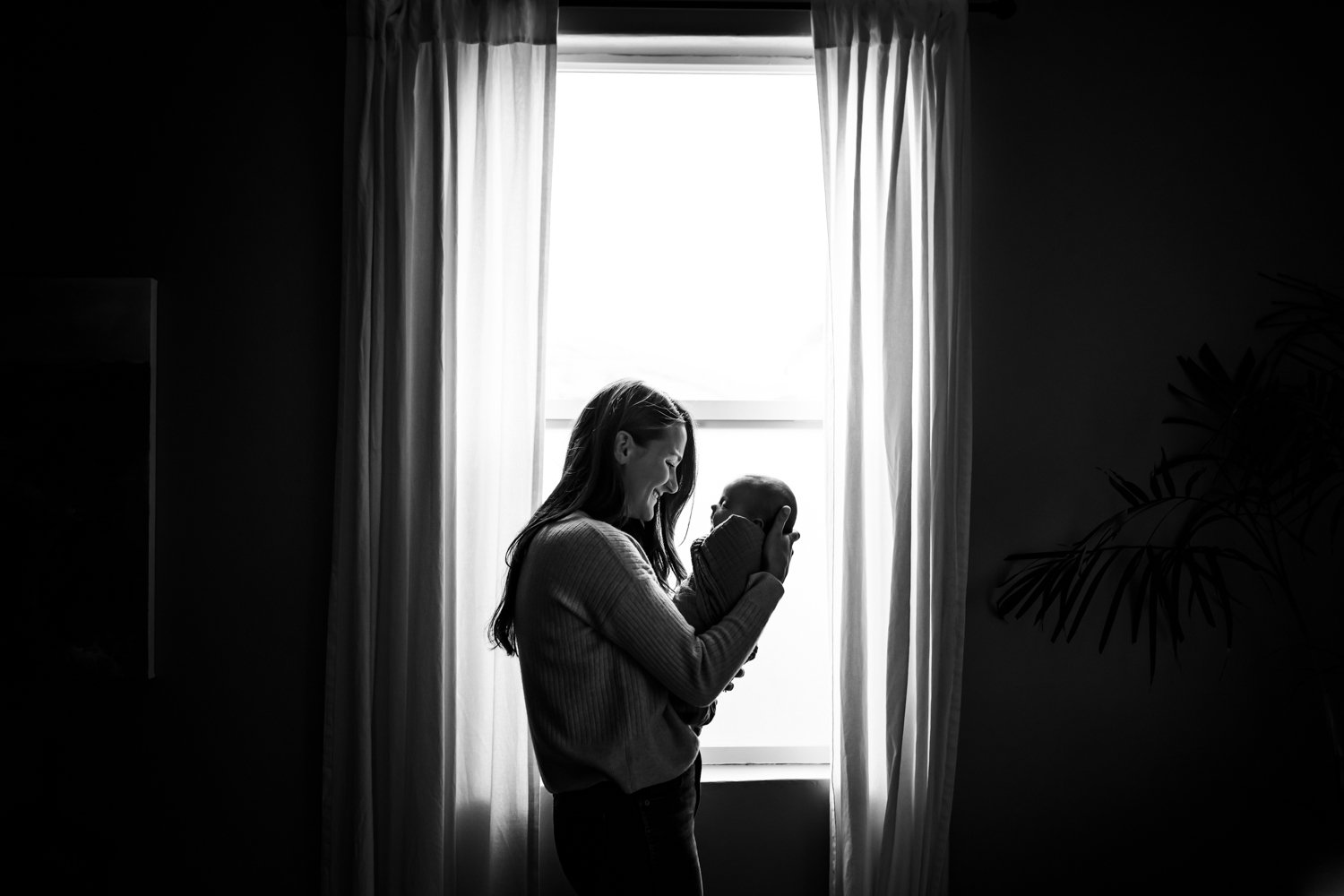
In the first weeks, babies need full head and neck support, so we work around that — family holds, crib moments, positions where they’re fully secure. What we’re documenting at this stage is mostly stillness: the way they tuck into your chest, the curl of their spine, details that are already gone by week three. Everything moves at your baby’s pace.
Growing Stronger
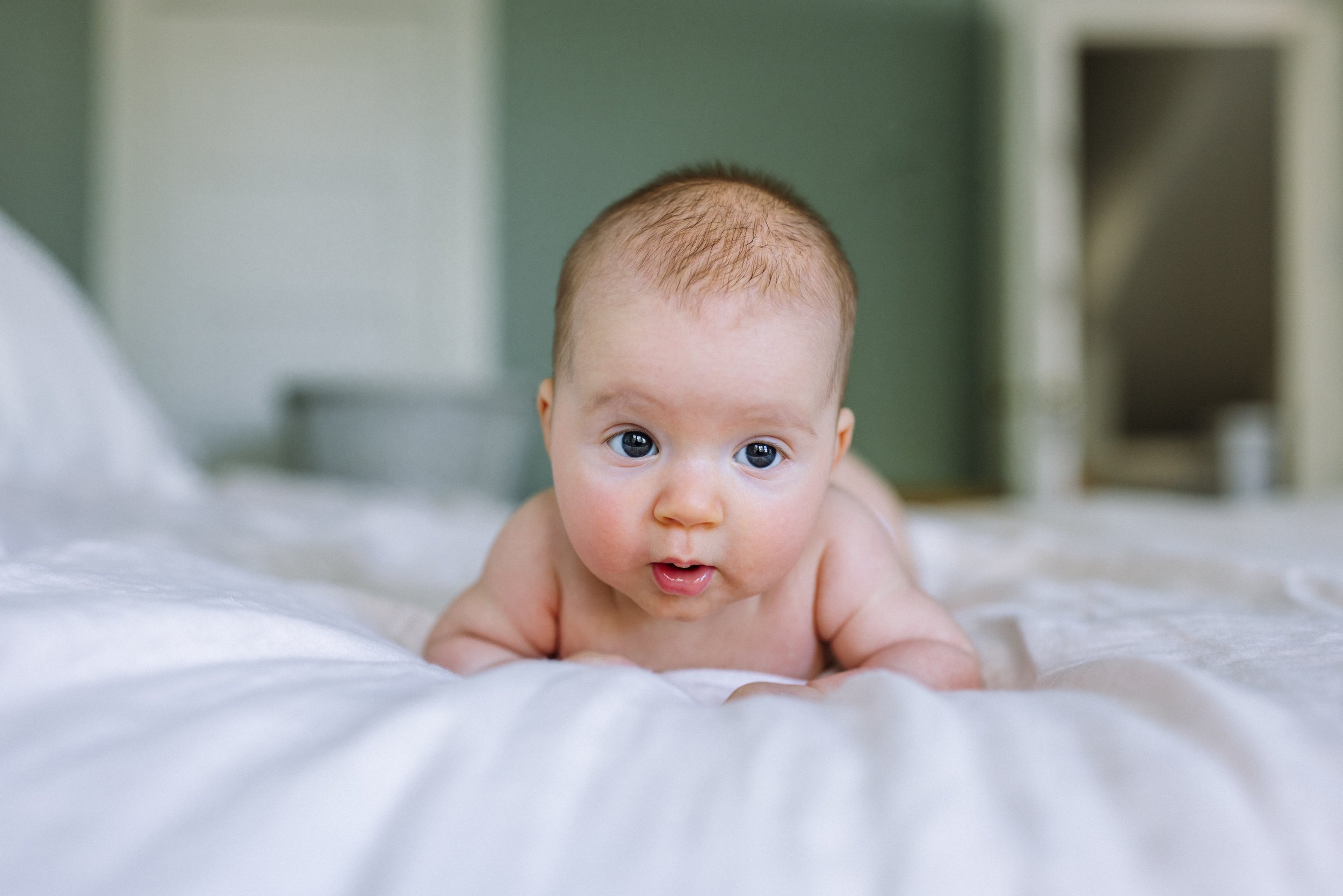
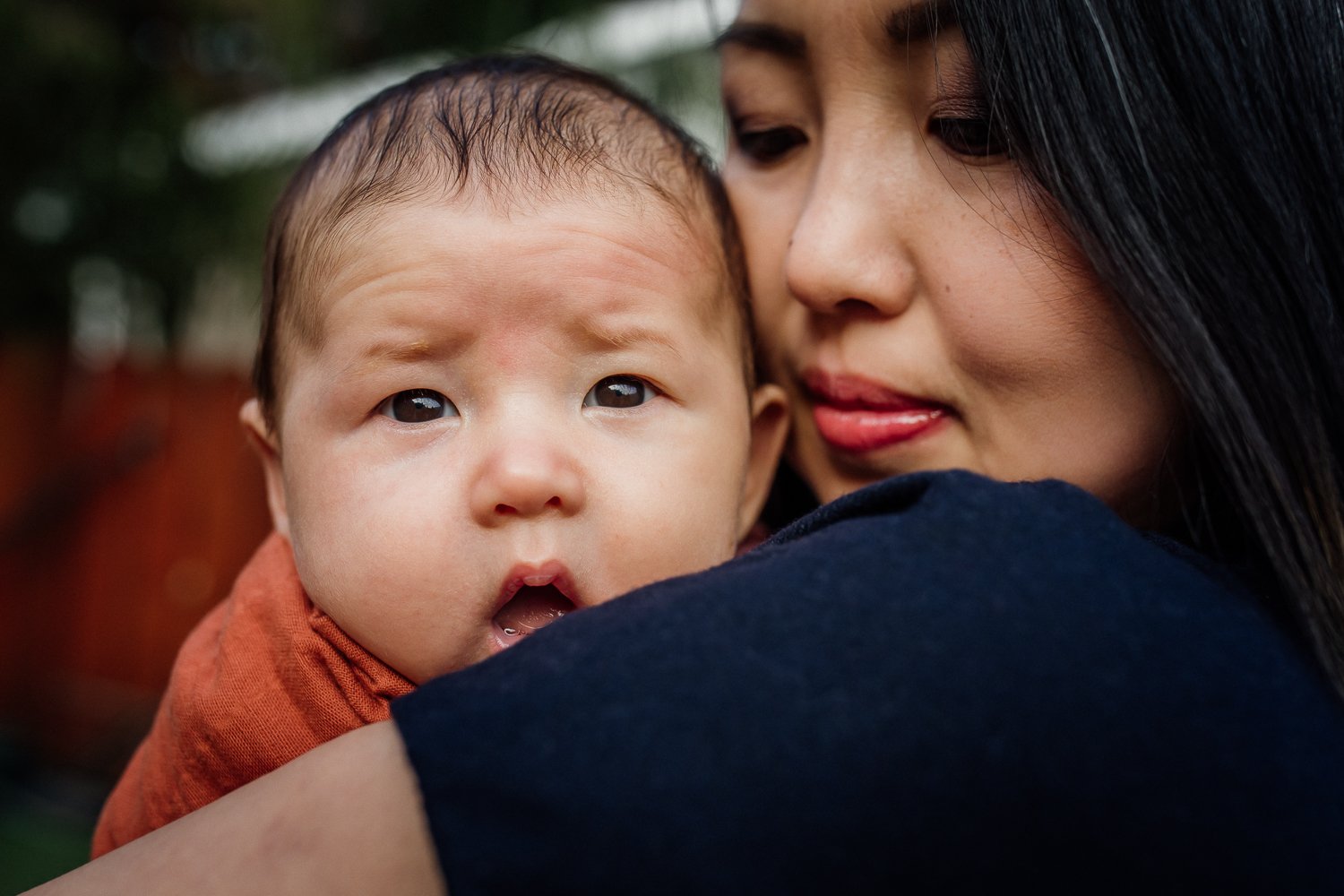
By 5–6 weeks, most babies are starting to push up slightly during tummy time and hold their head for a few seconds on their own. They rest differently on your chest than they did at two weeks — more alert, less folded. Their hands are opening up more, which means more of those moments where their fingers wrap around yours. Small changes, but noticeable ones, and worth photographing before they’re gone too.
Emerging Personality
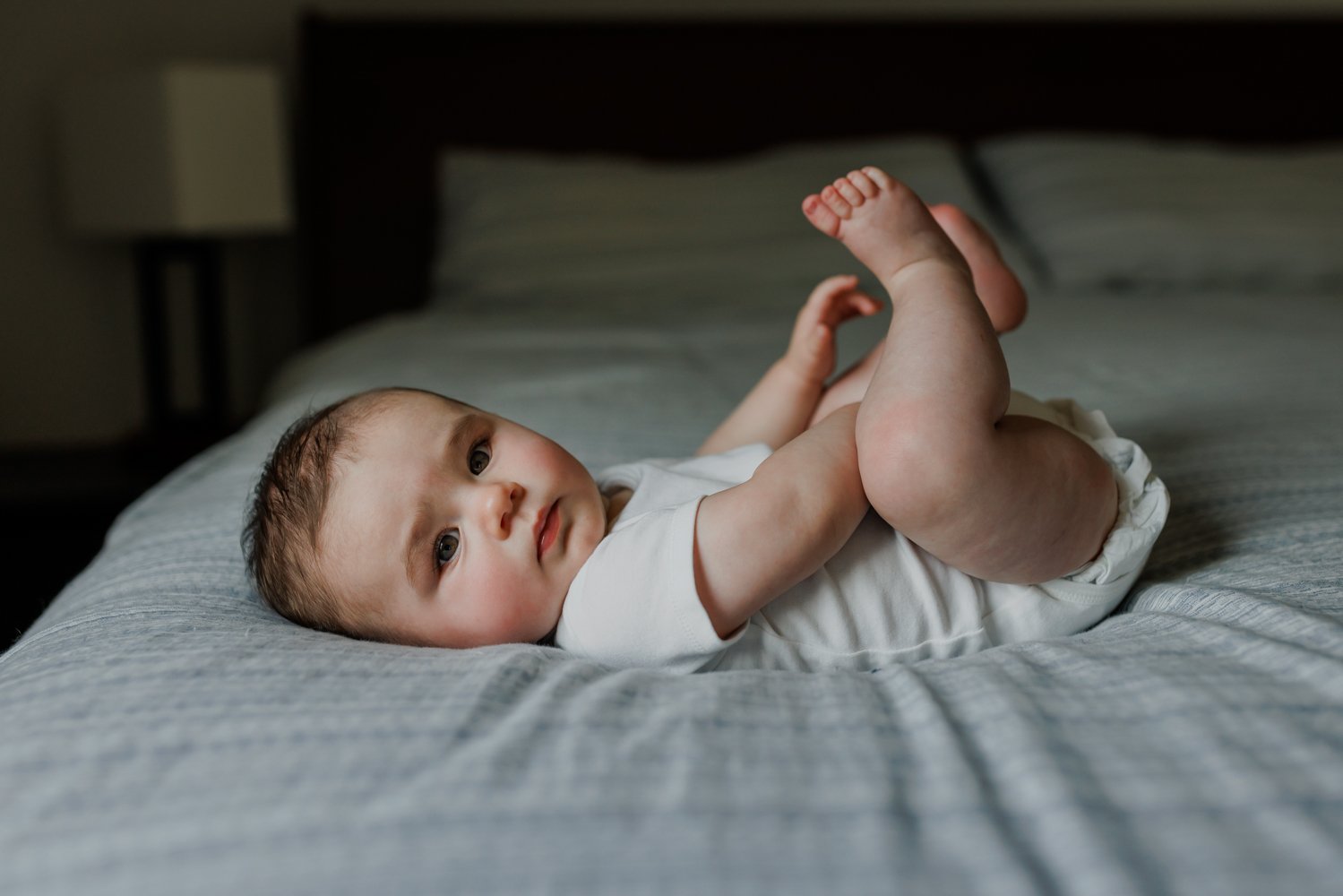
Around four to six weeks, babies start tracking faces and responding to voices — you’ll notice them turning toward you when you speak. By two months, they’re holding eye contact for longer stretches and following movement across the room. The first real social smiles usually show up somewhere in the 6–8 week window, and by three months, most babies are laughing. Each of these moments has its own quality — and by the time you notice them, they’re usually already changing.
When to Schedule Your Newborn Session
There’s no wrong time to schedule — each stage has something worth documenting. If you’re not sure what timing makes sense for your family, we can talk through it during planning. Learn more about newborn and Fresh 48 sessions or get in touch to start planning.
More Stories Like This
Want to keep exploring? Here are a few good places to start.


+ show comments
- Hide Comments
add a comment